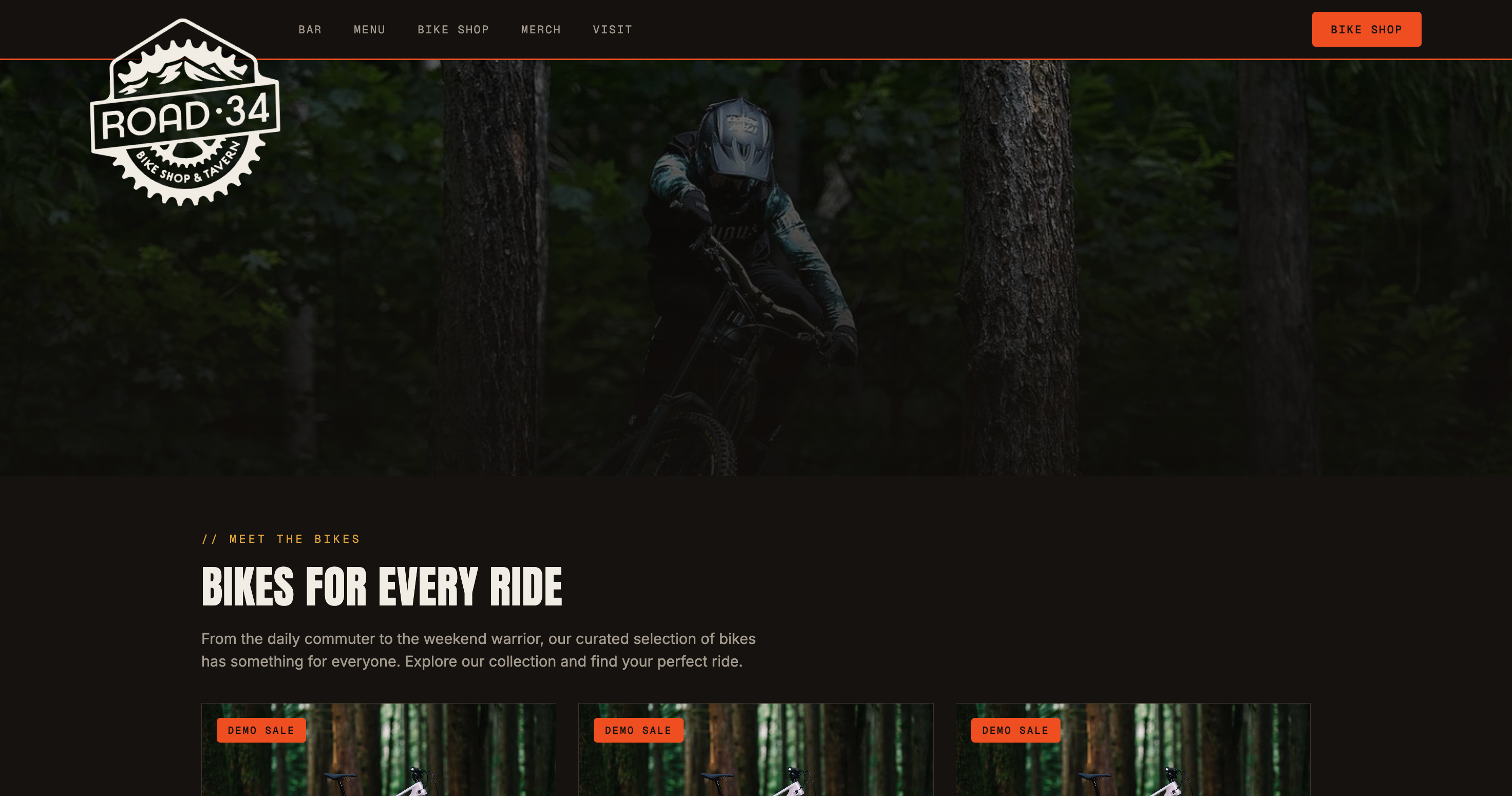
Road34 Redesign: AI + pen.dev + Sanity
Rebuilt Road34's marketing site using AI scaffolding, pen.dev for design exploration, and Sanity CMS for content management.
The Challenge
Road34 needed a marketing site redesign that captured their ride + bar identity while giving the content team (non-developers) the ability to update frequently-changing content like menus, bike inventory, and taps without engineering involvement.
The constraint: build it fast while keeping the architecture clean for long-term maintenance.
The Solution
Built a monorepo structure with AI-assisted scaffolding, design exploration in pen.dev, and a Sanity-powered content management layer.
Architecture:
- Frontend: Astro 7 for static-first performance and clean page composition
- CMS: Sanity Studio v5 for structured content editing with custom deploy UI
- Data: GROQ queries with
@sanity/clientfor efficient content fetching - Design: pen.dev for visual system exploration and component polish
- Deployment: Vercel with automatic deploys triggered from Sanity Studio
Tech Stack:
- Astro 7 + Node 22+ for frontend
- Sanity Studio v5 + React 19 for editor tooling
@sanity/astroandastro-portabletextfor seamless integration- TypeScript throughout for type safety
- Vercel deploy hooks for automatic publishing
Key Implementation Details
Phase 1: AI-Assisted Scaffolding
- Generated base page structures and component shells with guardrails from chosen stack
- Drafted Sanity schemas and GROQ query shapes
- Set up document types for pages, sections, and reusable cards
- Established fetch patterns with fallback strategies
Phase 2: Sanity Content Architecture
- Designed composable content model (pages, sections, cards) instead of rigid page templates
- Created core document types:
homePage,menuPage,barPage,bikesPage,merchPage,visitPage - Implemented “Active + effectiveFrom” behavior for time-sensitive content (menu, taps)
- Added validations (required fields, alt text) to prevent content fragility
Phase 3: pen.dev Visual Exploration
- Defined reusable card patterns and visual hierarchy
- Established imagery direction (bikes vs. bar vs. food storytelling)
- Refined typography, spacing, and visual rhythm
Phase 4: Astro + GROQ Integration
- Built dynamic bike detail routes from
bikeCardslugs - Implemented fallback strategies (featured bikes → all bikes if empty)
- Used Portable Text for rich bike descriptions
- Created URL builder utility for predictable image transformations
Results
- Live redesign deployed to production with improved UX
- 6 dynamic pages built with reusable section patterns
- 8+ content types enabling flexible, editor-driven content composition
- Content team autonomy — menu, taps, and bike updates don’t require engineering
- Type-safe content — Sanity validations prevent broken layouts
- Deploy automation — One-click publishing from Studio triggers Vercel builds
Impact
The Sanity-driven approach proved especially valuable because it shifted content management from code-based (hardcoded menus) to schema-based (editors manage structured data). The reference-based composition meant content could be reordered and updated without touching code.
This project validated an AI-assisted scaffolding workflow: use AI for structure and setup, but rely on thoughtful schema design and validation to ensure the content layer stays reliable over time.
Live project: https://road34.vercel.app/