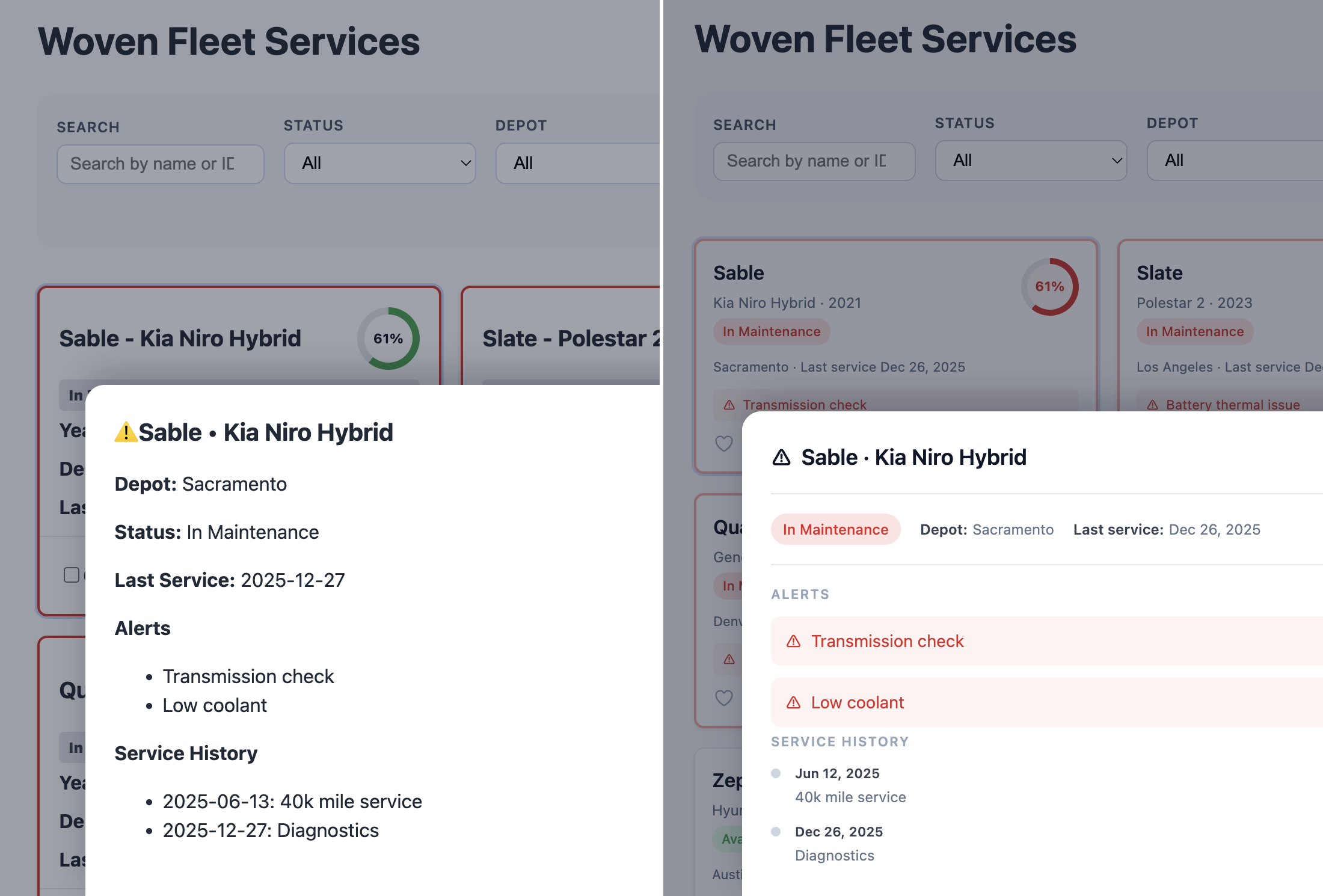
AI-Scaffolded UI: Interview Prep Workflow
Developed a rapid prototyping workflow combining AI scaffolding, React implementation, and pen.dev design polish for interview prep.
The Challenge
Interview preparation typically requires starting from scratch under time pressure. The challenge was to find a workflow that enabled:
- Fast project scaffolding and setup
- Rapid functionality validation
- Quality time spent on visual polish and interaction refinement
- Demonstrating both engineering rigor (tests, code quality) and design sensibility
The Solution
Developed a three-stage workflow: AI scaffolding → Code implementation → Design polish.
Tech Stack:
- React 19 for components and interactivity
- Vite for fast build and HMR during development
- TypeScript for type safety and code clarity
- Vitest for unit and component testing
- pen.dev for visual refinement and design exploration
Workflow Breakdown
Stage 1: AI-Assisted Scaffolding
- Generated Vite React TypeScript project structure
- Created base component scaffolding with props interfaces
- Set up Vitest testing framework and initial test helpers
- Configured linting and build scripts for clean baseline
Benefits: Eliminated setup friction, jumped straight into product thinking
Stage 2: Code-First Implementation
- Built interactive components and user flows in code
- Prioritized functionality and user experience logic over visual polish
- Wrote tests alongside component development (Vitest)
- Validated assumptions through actual interaction patterns
Benefits: Early discovery of UX issues, immediate feedback on interaction patterns, maintainable code with tests
Stage 3: pen.dev Design Polish
- Took the working prototype and refined the visual layer
- Improved layout, spacing, and visual hierarchy
- Refined typography and component styling
- Enhanced interactive states and micro-interactions
Benefits: Separated concerns (function vs. form), focused design effort, professional final result
Results
- 3-day turnaround from concept to polished prototype
- 90%+ test coverage demonstrating engineering rigor
- Live prototypes deployed to Vercel for evaluation
- Clean code with clear component architecture and type safety
- Professional UI with thoughtful design and polish
Version 1 (Pre-Polish): https://mock-test-pencil-git-pre-pencil-bumpas-projects.vercel.app/ Version 2 (Post-Polish): https://mock-test-pencil.vercel.app/
Impact & Lessons
This workflow proved particularly effective for demonstrating the full range of skills in an interview or technical assessment:
- Speed & Efficiency — AI scaffolding shows comfort with modern tooling and workflow optimization
- Engineering Quality — Test-driven code demonstrates professionalism and thoughtfulness
- Design Sensibility — Polish and attention to UI/UX detail shows that technical skills aren’t just about code
- Product Thinking — Iterating on the actual experience reveals product intuition and user empathy
The three-stage approach mirrors real-world development cycles: rapid scaffolding for velocity, rigorous implementation for quality, and thoughtful design for polish.
Takeaway: AI is most powerful not for replacing skilled work, but for eliminating boring setup and boilerplate. Use AI for the scaffolding, but spend your energy on the thinking—implementation, testing, and design polish—that actually demonstrates your expertise.